Independent editorial·No bookings · No tickets·Field-tested in Abu Dhabi·Updated routes & timetables·Reader-supported journalism·Independent editorial·No bookings · No tickets·Field-tested in Abu Dhabi·Updated routes & timetables·Reader-supported journalism·
Long-form reviews of Abu Dhabi’s most useful bus lines and sightseeing coaches. Each piece covers the full ride, the realistic timing, the stops worth getting off at, and the stops to skip.
Sightseeing Coach · Red Loop
A loop around the island, decoded
First ridden 12 March · re-ridden 9 May · 14 min read
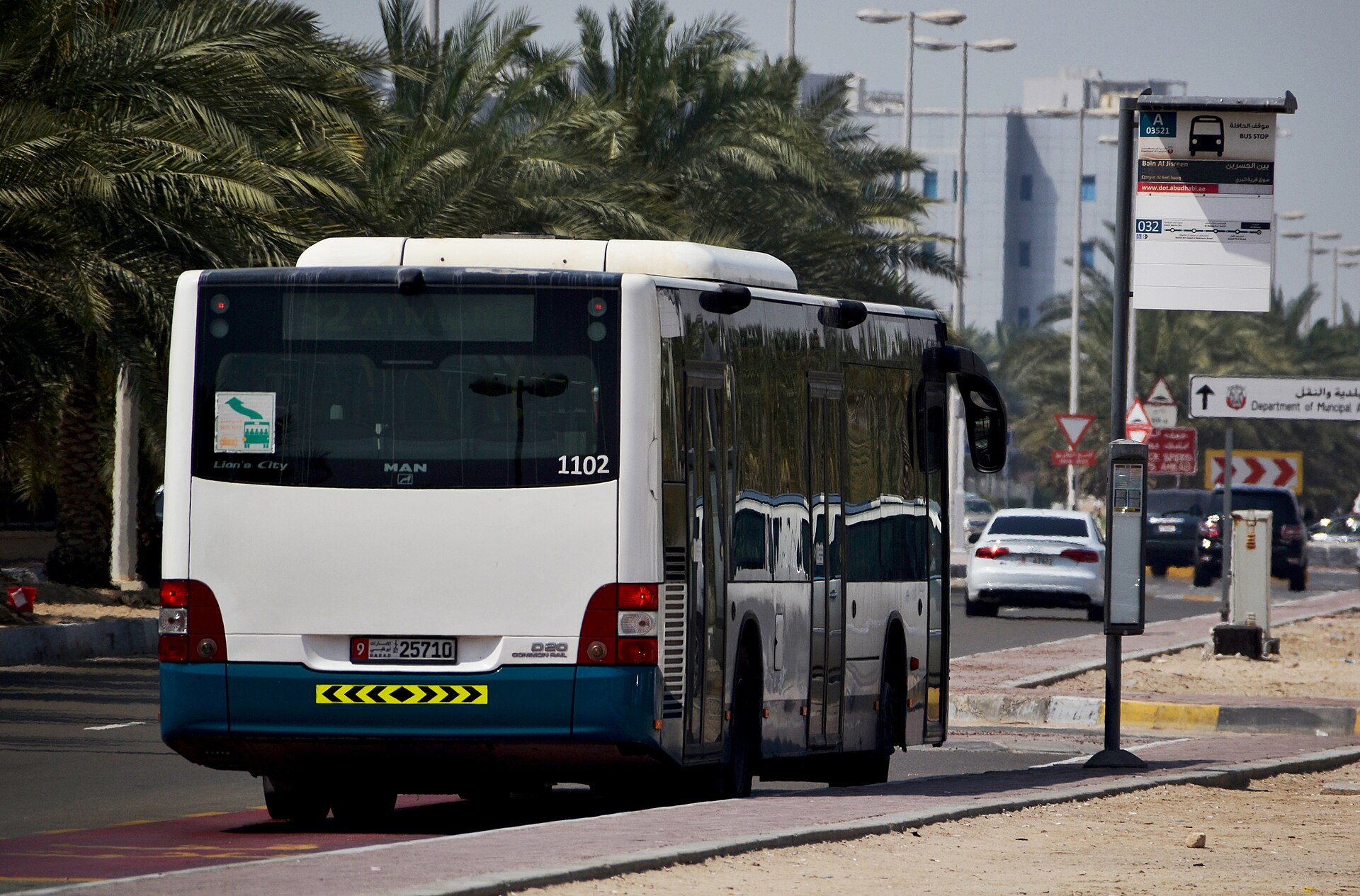
The route shares roads with public buses for most of its length — same lanes, same traffic lights.
We boarded at the Marina Mall pavilion at 09:14, on a Tuesday morning, with the temperature already at thirty-three degrees and a small queue of German pensioners ahead of us. The Red Loop has twenty-three published stops; on this day it ran twenty-one, skipping the two construction-affected pavilions on Hamdan Street. The driver announced the change in three languages without theatrics.
The first half hour belongs to the seafront. Leaving the Marina the coach climbs the gentle ramp past the Etihad Towers and slips onto the Corniche carriageway, and within ten minutes you have your first decision to make — the Heritage Village stop, two-thirds of the way along. We did not get off; we wanted to ride the whole loop first. This is the editorial recommendation: ride the entire circuit once, then decide where to spend the day.
What you actually see, in order
From the upper deck, the route reads like a quiet anthology of the city’s twentieth century. Marina Mall (1990s glass), Heritage Village (1980s reed-and-coral), Emirates Palace (2005, gilded), the older blocks of the Hamdan corridor (1970s stucco and shadow), and finally the cluster around the Cultural Foundation and Qasr Al Hosn. The driver does not narrate; the on-board commentary, in your chosen language, is on a small handset attached to your seat.
Where to break the loop
If you only have time for two stops, our editorial pick is the Heritage Village in the morning and Qasr Al Hosn in the late afternoon. The reasoning is light: at the Village the breeze comes off the breakwater and the volunteer artisans are still fresh; at Al Hosn the late sun lands flatly on the white tower and makes the photograph everyone wants to take.
Practical notes
Loop time, end to end without stops: 1 h 55 min on a Tuesday; 2 h 20 min on a Friday afternoon.
First service of the day usually departs Marina Mall at 09:00; last departure 17:00.
Upper deck is uncovered. Bring a hat between April and October.
Lower deck is air-conditioned and best in the heat of the afternoon.
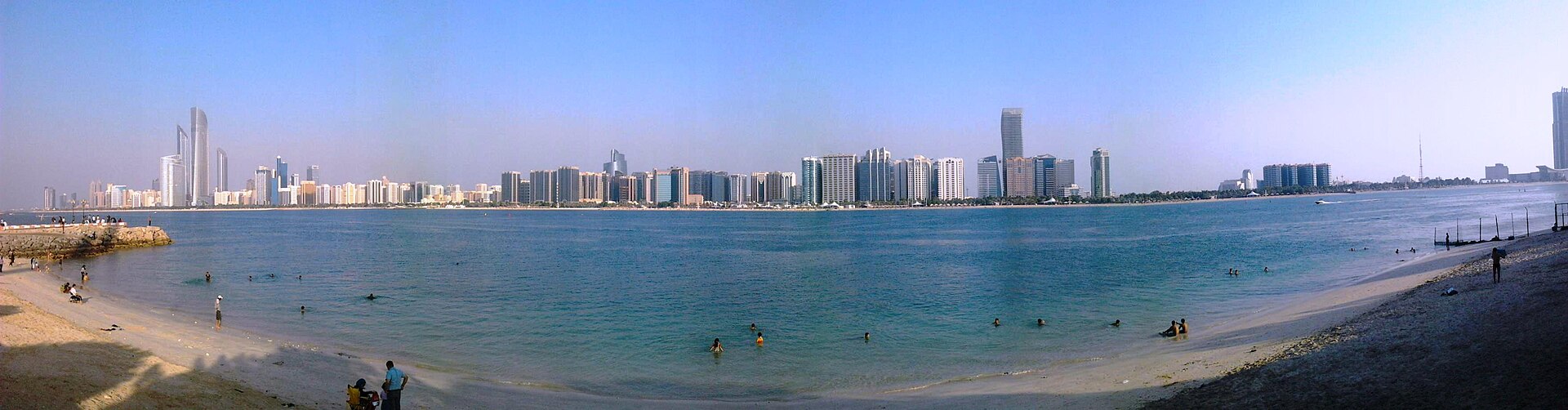
Corniche Beach as the route turns inland near the Volcano Fountain.
Route 32 is the workhorse of the Corniche. It begins at the Al Bateen end, near the marina at the western tip of the island, and finishes its run at Mina Zayed by the dhow harbour. Locals use it to commute, to do the school run, to reach the fish market on a Friday morning. The fare is paid with a Hafilat transit card — every paper guide in the city covers the mechanics of buying one, and so we will not.
Our editorial interest is what the line shows you for the price of a seat. From a window of Route 32 you see, in this order: the Marina, Khalidiya Park, the Heritage Village turn-off, the Volcano Fountain, the half-kilometre stretch where the seafront opens out and the towers stop crowding the road, the Capital Gate area in the distance, and the older corner of Mina Zayed where the dhows still unload.
The five viewpoints we noted
Mile 1.2 — looking left, the Heritage Village breakwater and a slice of dark blue sea.
Mile 2.4 — looking right, the line of the Etihad Towers reflected in the Emirates Palace gardens.
Mile 3.6 — the Volcano Fountain plaza, best from the upper-window seats on the seaward side.
Mile 5.0 — the open stretch where the road widens and the bus picks up speed; the city skyline rearranges itself entirely.
Mile 6.8 — the dhow harbour, only visible for thirty seconds before the line turns inland.
People we spoke to
An Egyptian schoolteacher who has ridden the line every working day since 2011; a Filipina nurse going off shift at the Sheikh Khalifa hospital; an Emirati student who corrected our pronunciation of two stop names with patience and a smile. The bus, in our experience, is the most patient classroom in Abu Dhabi.
City Shuttle · Mosque-bound
Mosque-bound, the quiet way
First ridden 23 January · 9 min read
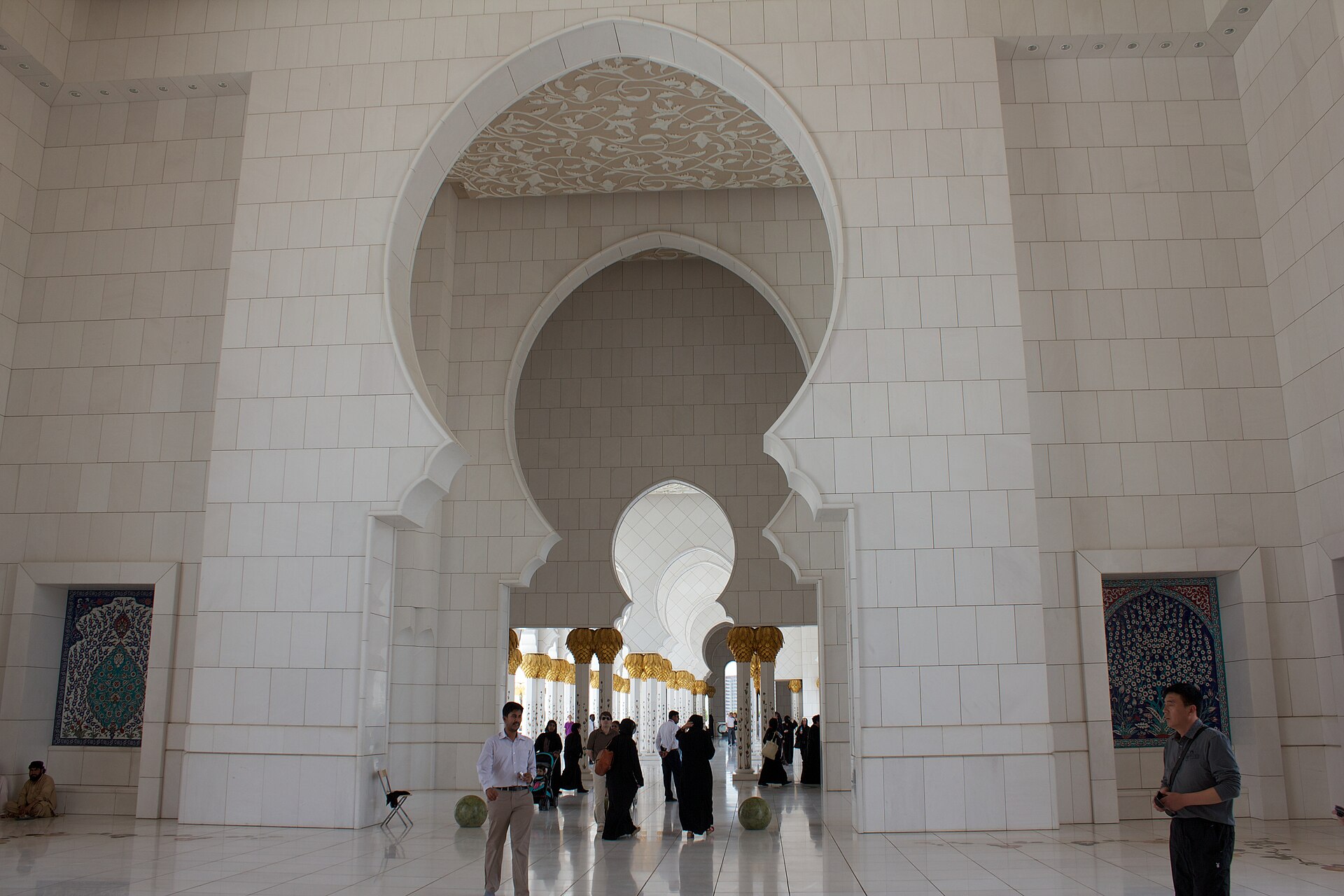
The colonnade leading to the main prayer hall — quietest at 09:30 on a weekday morning.
Three different bus services converge on the Sheikh Zayed Grand Mosque, and they are not equally pleasant. The first is the city public service, which drops passengers at the visitor entrance after a forty-minute ride from the city centre. The second is a free weekend shuttle organised by the mosque itself for residents of certain districts, with limited availability. The third is the sightseeing coach, which makes a short detour but spends most of its time at the visitor centre car park rather than approaching the building.
For an unhurried first visit, we recommend the public service. It deposits you at the same gate as the others, but at a moment when the morning groups have already gone in and before the lunchtime tour buses arrive. From the bay where the bus stops it is a five-minute walk under shaded arcades to the security pavilion. Inside, the route to the prayer hall is signposted in three languages and follows the longer of the two outer galleries, which is the editorial preference.
Etiquette in plain English
The mosque is open to non-Muslim visitors outside prayer times. The dress code is straightforward: long sleeves, ankle-length clothing, headscarf for women. Free abayas are available at the visitor centre. Speak quietly. The carpet inside the prayer hall is famously the largest hand-knotted piece in the world, and you are not required to admire it for any particular length of time — but it does reward a slow walk along its diagonal.
Public Bus · Yas Island
Yas Island on a public bus
First ridden 17 April · 10 min read
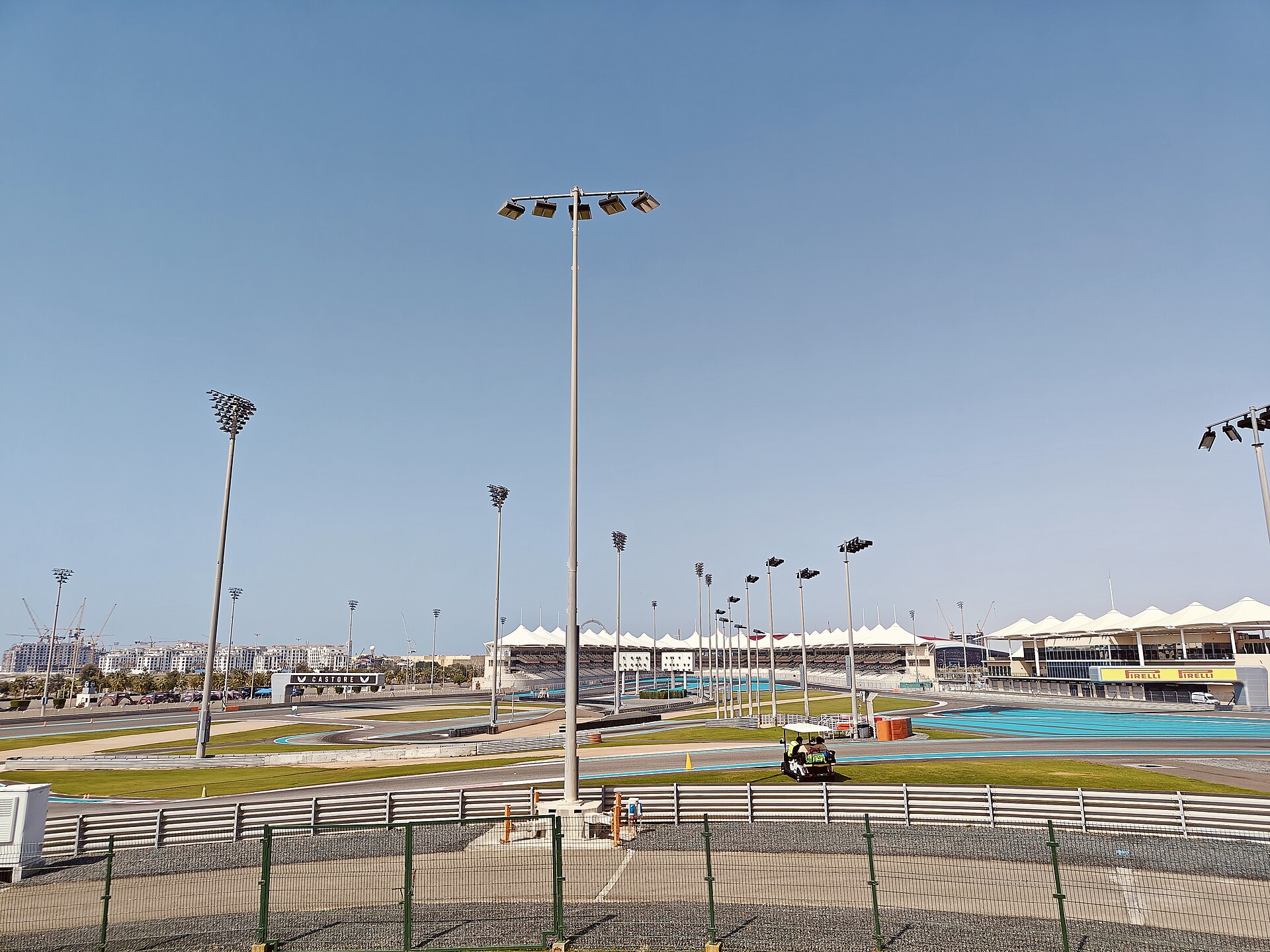
The Yas Marina grandstand, seen from the public-bus drop-off point.
Yas Island is mainly designed around the car, and yet two public lines reach it on a regular timetable. Both share the long bridge across the lagoon and both pass within walking distance of the marina circuit, the central plaza, and the broad promenade that runs the western side of the island. We rode them on consecutive Saturdays and prefer the second, on the simple basis that the driver took the longer southern approach and let us see more water.
What the bus does not do is take you to the gates of any individual venue. From the central plaza stop it is a quiet, well-shaded walk of seven to twelve minutes to most points of interest. The walk itself is part of the editorial pleasure: the architecture on the island is unusually low-slung and the absence of cars on the inner roads is, on a Saturday, almost startling.
We use a small number of cookies to remember your preferences and analyse traffic anonymously. See our Privacy Policy.