Independent editorial·No bookings · No tickets·Field-tested in Abu Dhabi·Updated routes & timetables·Reader-supported journalism·Independent editorial·No bookings · No tickets·Field-tested in Abu Dhabi·Updated routes & timetables·Reader-supported journalism·
For each landmark, we name the closest public bus stop, the realistic walking time, and what to look at on the way. No apps, no QR codes — just a paragraph at a human pace.
Louvre Abu Dhabi · the slow approach
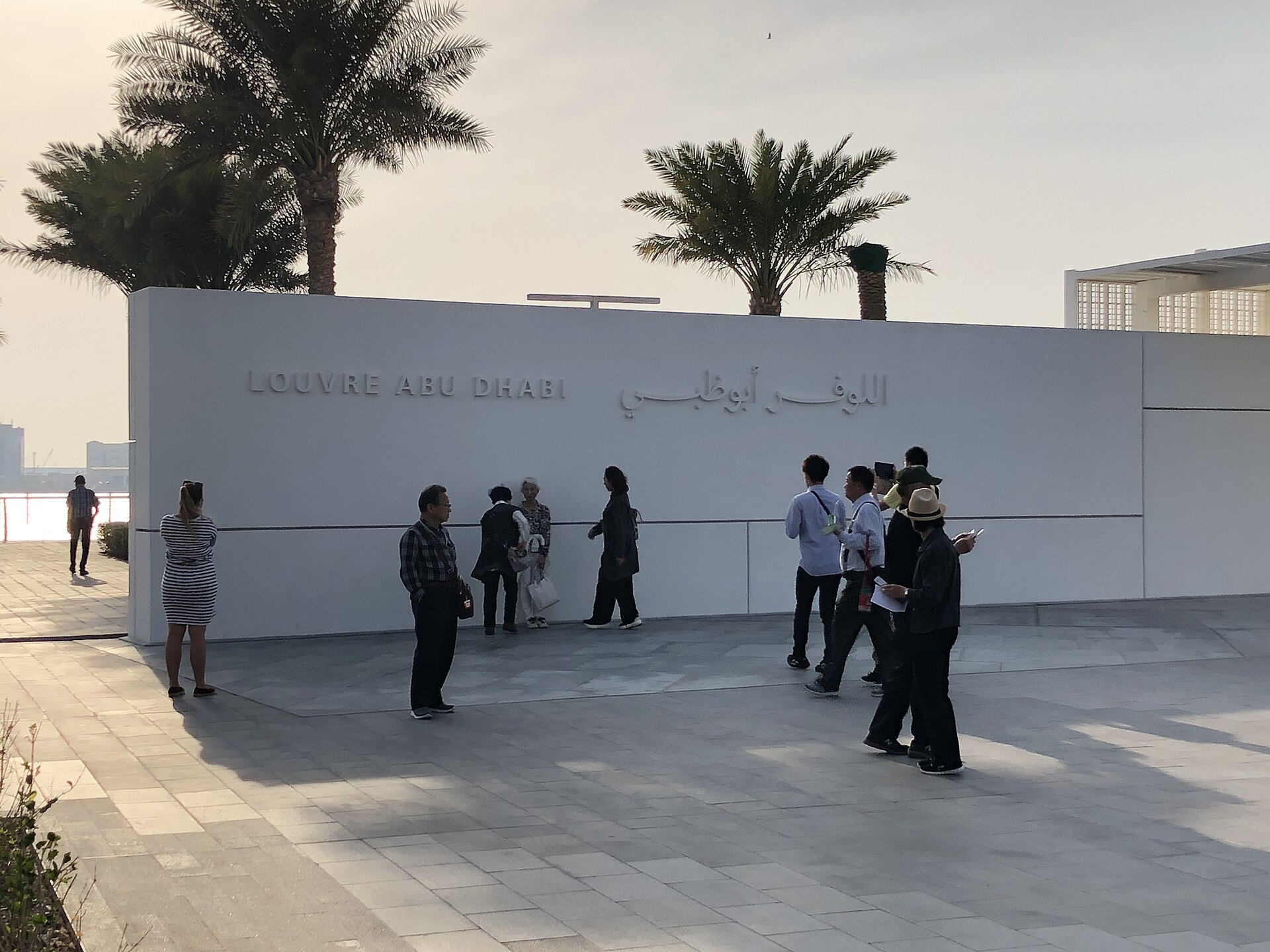
The understated outer wall of the Louvre Abu Dhabi at the Saadiyat Cultural District.
The trick to the Louvre Abu Dhabi is to arrive on foot. The closest public bus stop is on the western edge of the Saadiyat Cultural District, a fifteen-minute walk from the museum forecourt along a seafront pavement that almost no visitor uses. Take that walk. The dome appears to you in the order it was meant to: first as a low silver disc above the trees, then as the textured underside of a perforated geometry, then as a roof you can stand under.
Inside, the museum is best read chronologically — the galleries are organised around shared moments in human history, with objects from different civilisations set into dialogue with each other. We recommend allowing two hours minimum and three for a first visit. There is a café in the central courtyard which is, surprisingly, both quiet and serviceable.
What to look at on the walk
The seafront pavement passes a small public garden, a low boat-launch jetty, and a shaded pergola that catches the breeze even on the warmest days. The garden is the editorial recommendation for ten quiet minutes before going in.
Heritage Village · a free morning by the breakwater
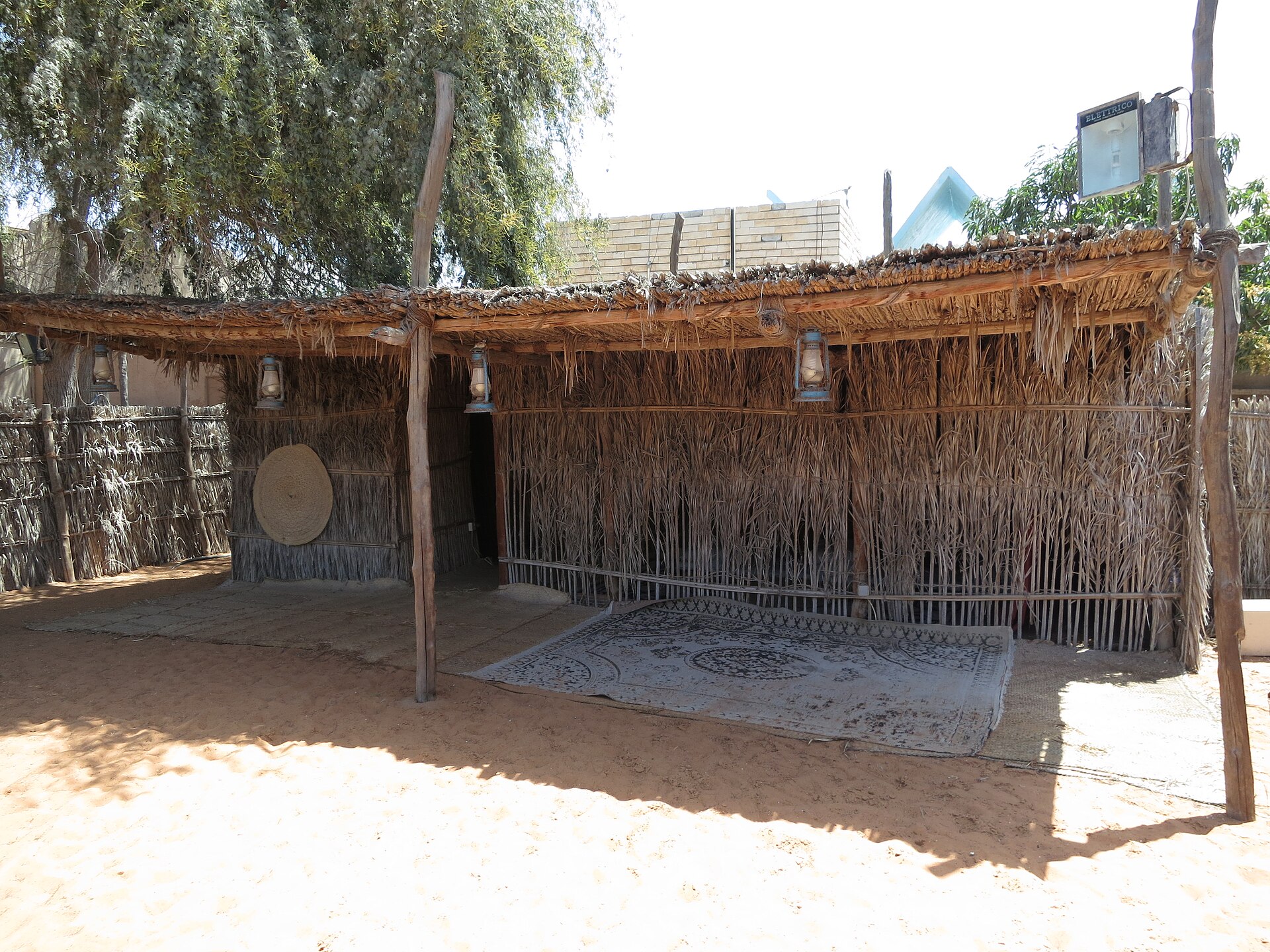
One of the reconstructed reed-and-palm dwellings at the Heritage Village.
The Heritage Village is the most under-rated public space in Abu Dhabi. Entry is free, opening hours are generous, and the entire complex is a five-minute walk from a public bus stop on the Marina Mall side. The village reconstructs a small Bedouin and pearling settlement with a falaj irrigation channel, a souk, a row of artisans’ workshops, and a low-walled mosque facing the breakwater.
What is most editorially interesting is the breakwater itself. From the seaward edge of the village, you have one of the best uninterrupted views of the Abu Dhabi skyline, with the Marina at your back and the Etihad Towers in the middle distance. We have walked it three times in the same week to write this guide, and on each visit a different combination of light and tide reorganised the photograph.
Practical notes
The artisans’ workshops are open mainly on weekday mornings.
The breakwater can be windy in the late afternoon — pleasantly so in winter, less so in August.
There are clean public toilets and a small canteen at the village entrance.
Eastern Mangroves · an hour out of the centre
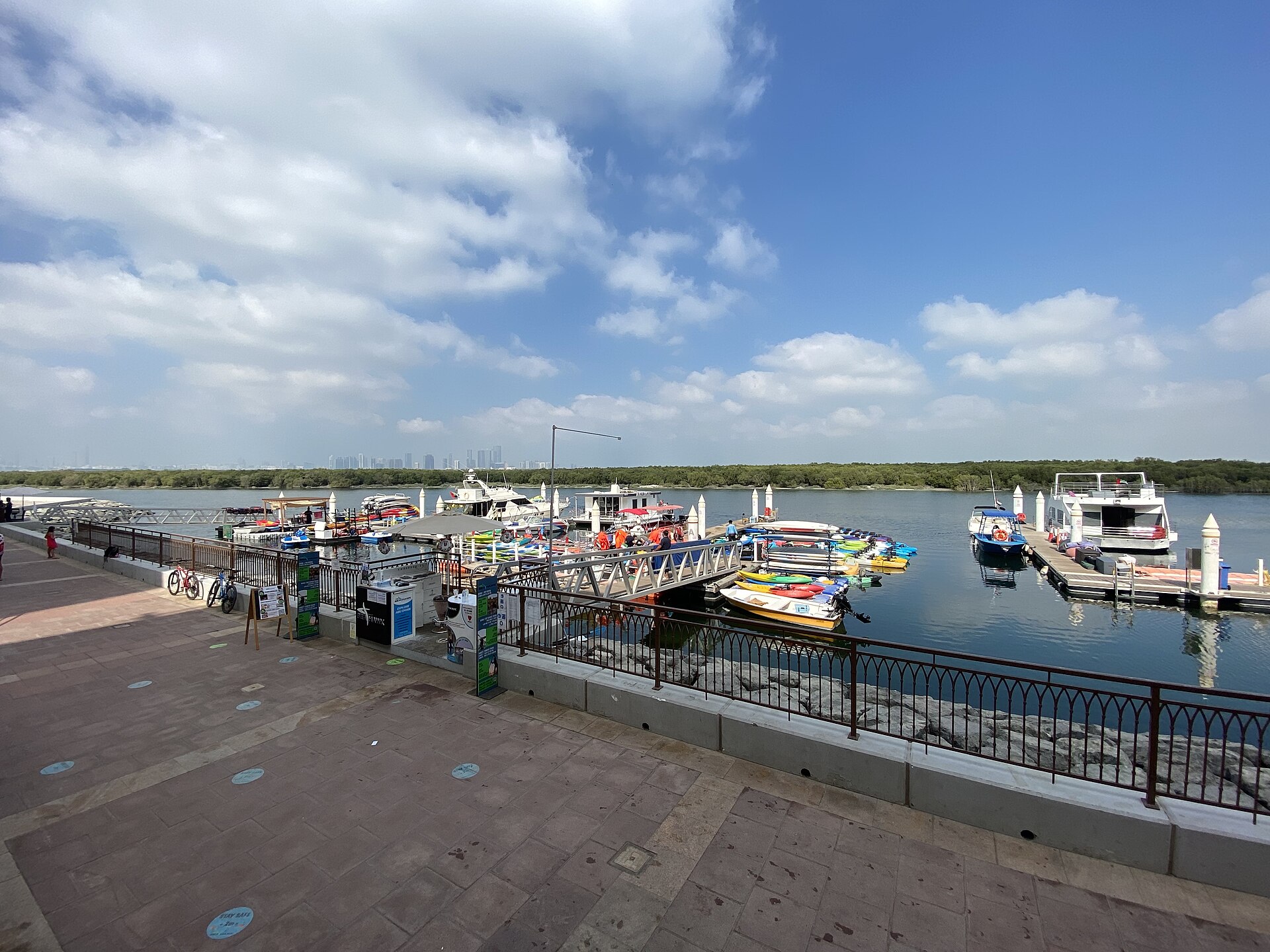
The Eastern Mangroves promenade and small craft marina, on a quiet weekday morning.
The Eastern Mangroves are reached on the city public bus, with a single change at the Maqta junction. Allow forty-five minutes to an hour from the city centre. The bus drops you a short walk from the boardwalk, which is the editorial point of interest: a kilometre-long timber promenade running along the inner edge of the mangrove inlet, with a series of benches at regular intervals.
We recommend reading on the bench at the far end. The city is just close enough to remind you it exists, and the water is just still enough to flatten its sound. Birdlife is plentiful: heron, egret, the occasional flamingo at low tide, and the small clouds of mangrove warblers that move between the inner branches.
Qasr Al Hosn · the white tower
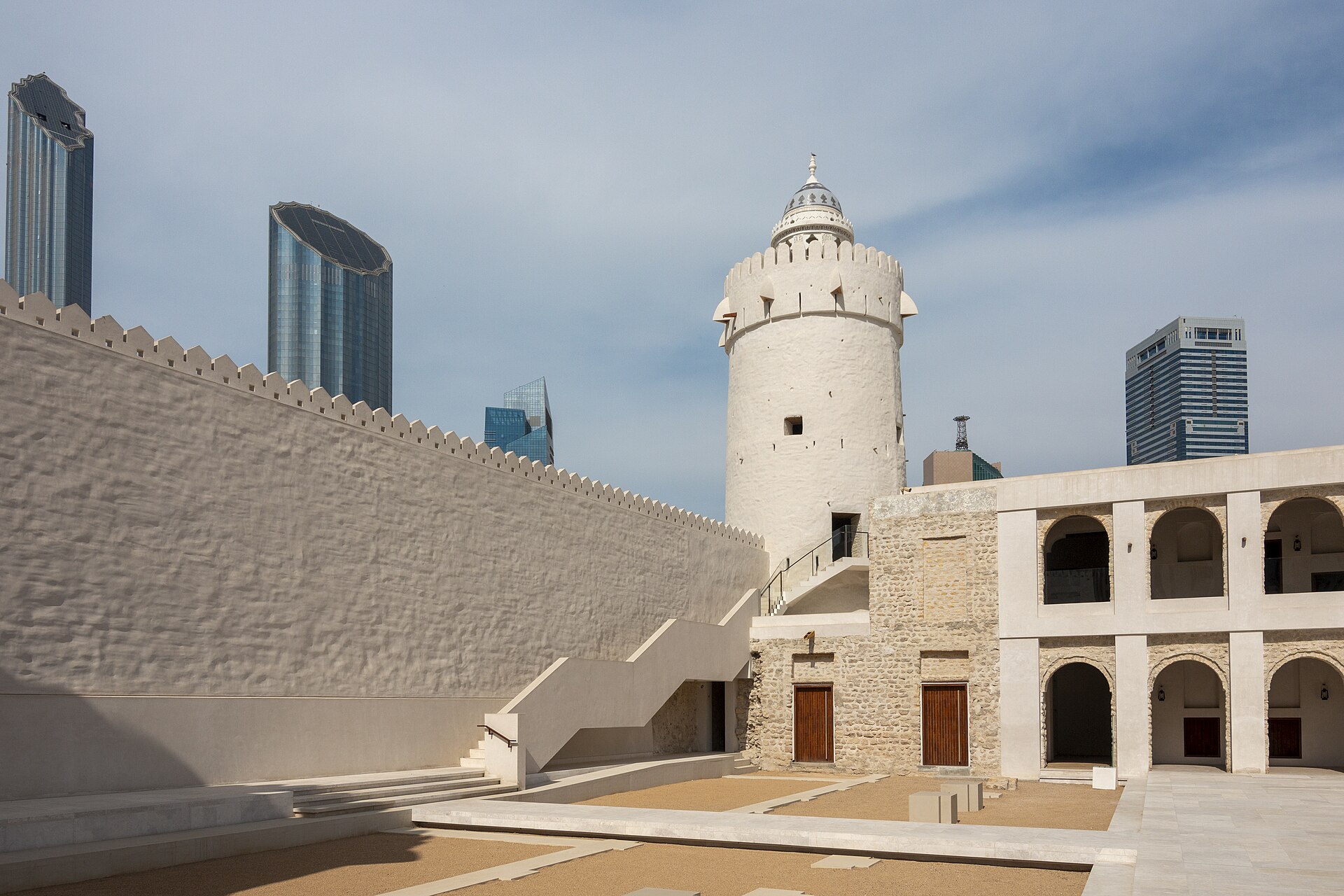
The watchtower of Qasr Al Hosn, with the contemporary skyline crowded behind it.
Qasr Al Hosn is the oldest stone building in Abu Dhabi and now sits in the middle of a cultural complex that includes a small museum, the Cultural Foundation, and a crafts house where younger artisans rotate through residencies. From any city-centre bus the fort is reached on foot in under ten minutes; the closest stops are on Sheikh Rashid bin Saeed Street.
The editorial recommendation is to enter through the museum first, follow the chronology, and leave through the courtyard at the rear of the watchtower. The courtyard is the photograph: a single white tower with the contemporary skyline rising behind it, and the visual compression of three centuries into a single frame.
Saadiyat Beach · clean light, soft sand
The public stretch of Saadiyat Beach, photographed from above on a clear winter morning.
Saadiyat Beach has a quiet, well-maintained public stretch which is reachable by a single bus from central Abu Dhabi. The walk from the bus stop to the beach gate takes ten to twelve minutes along an unshaded paved path; a hat is a good idea between April and October. The sand is unusually soft and the water clear by the standards of any city beach we have written about.
The editorial pleasure here is the light. On clear winter mornings the sea is a colour that is difficult to photograph and impossible to describe without sounding like a tourism brochure. We will simply say that we have spent more time looking and less time taking notes on this beach than on any other in the city.
Emirates Palace gardens · a long walk
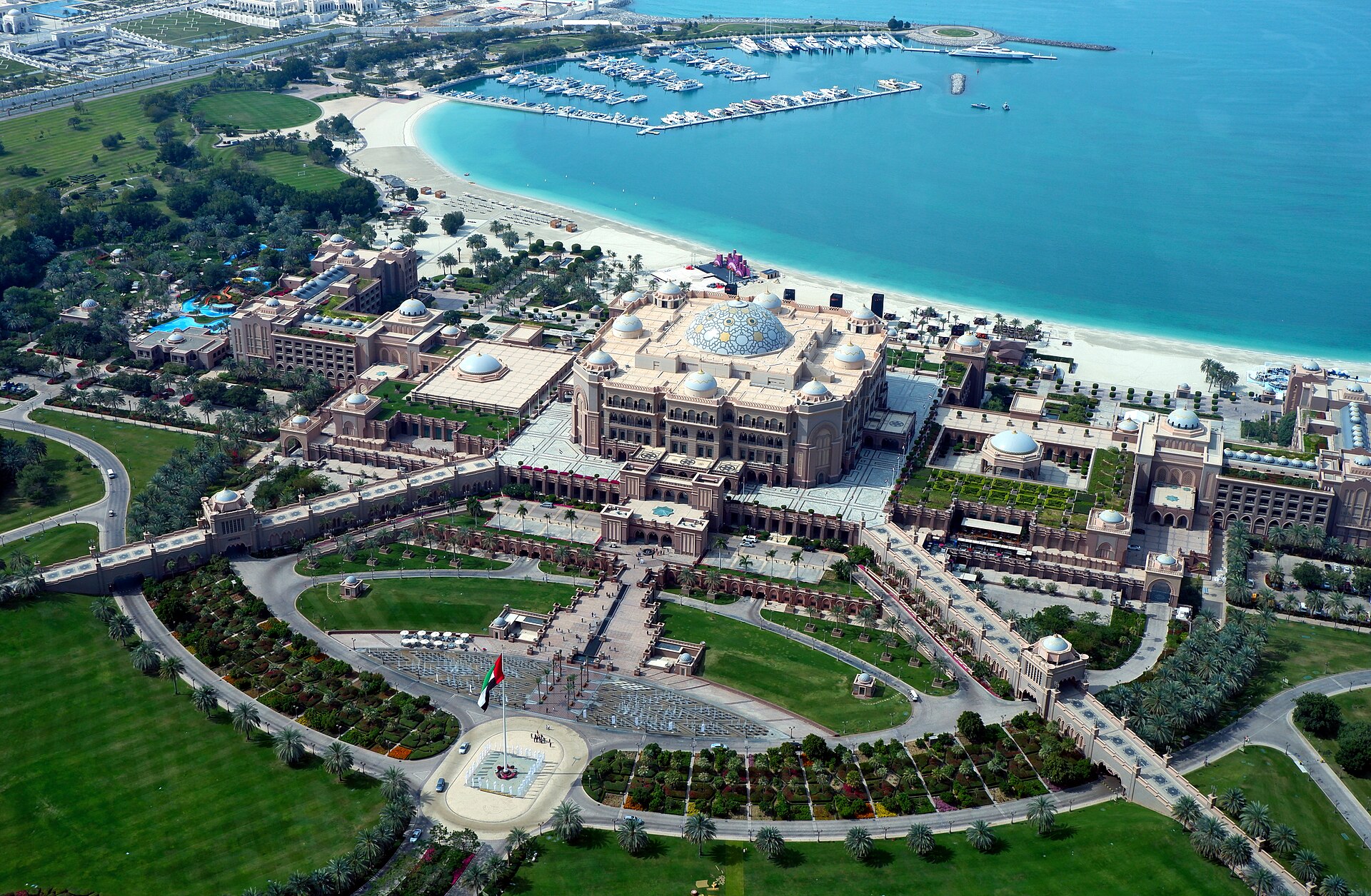
The Emirates Palace gardens from the air; the seafront walk follows the curve at the top of the frame.
The gardens around the Emirates Palace include a continuous public seafront walk of about two kilometres, beginning at the western end of the Corniche and ending at the steps below the palace forecourt. The walk is shaded for most of its length by mature palms and is reached, on the city side, from any of three bus stops on the Corniche carriageway.
Of the public spaces in the city, this is the one we send writers to when they need to think. Pace yourself: there are benches every hundred metres or so, and a small kiosk near the midpoint sells cold karak tea for a few dirhams. Allow forty-five minutes for the walk and another twenty for a stop at the midpoint.
We use a small number of cookies to remember your preferences and analyse traffic anonymously. See our Privacy Policy.